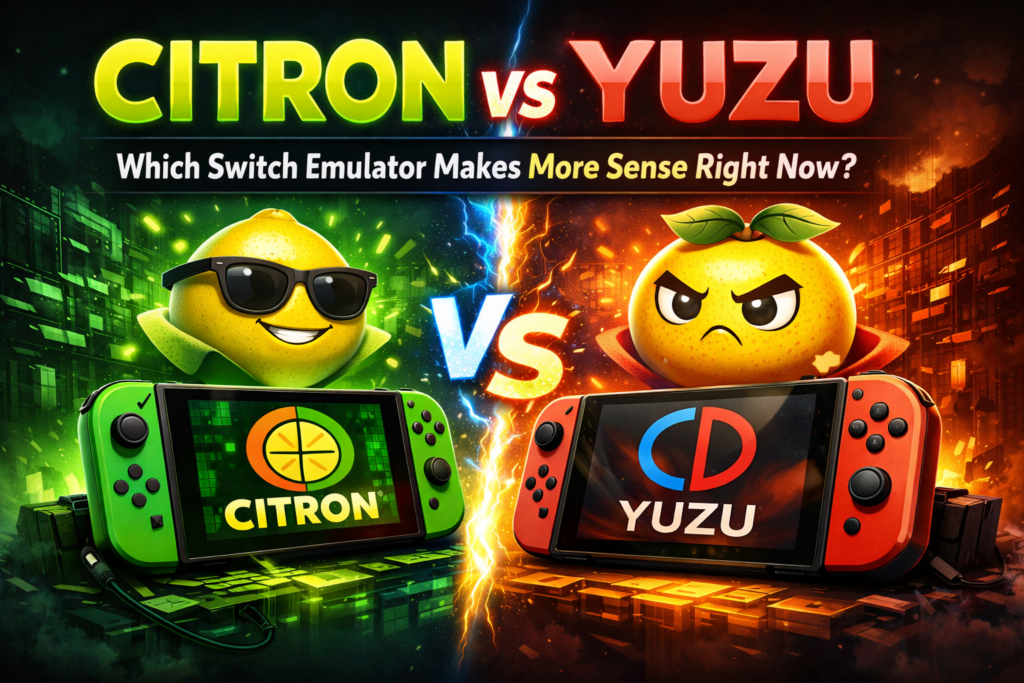
Switch emulation isn’t new anymore, but it’s still changing fast. Two names keep popping up: Citron and Yuzu. Both let you play Switch games on PC, but they don’t really feel the same once you start using them. One leans toward power and history. The other leans toward speed and simplicity.
If you’re stuck deciding, here’s the real-world difference without turning it into a tech lecture.
Yuzu
Yuzu has been around longer, and that shows. There are tons of guides, community posts, compatibility reports, and troubleshooting threads. If something breaks, chances are someone has already talked about it somewhere.
Where Yuzu is strong
- Years of development behind it
- Huge game compatibility list
- Constant fixes and improvements
- Big community = easier to find help
Where it can annoy people
- Needs stronger hardware to feel smooth
- Setup can be confusing if you’re new to emulation
- Lower-end PCs can struggle
- Some features historically showed up in early access first
Yuzu works best if you don’t mind tweaking settings, testing drivers, and occasionally fixing things yourself.
Citron
Citron came in with a different idea: make Switch emulation easier and lighter. It hasn’t been around as long, but it’s getting attention fast because it’s just easier to deal with for a lot of people.
Where Citron stands out
- Cleaner interface, less clutter
- Runs better on weaker or mid-range PCs
- Games usually boot faster
- Save files, updates, DLC handling feels more built-in instead of “add later”
- Development is very focused on user experience
Where it’s still catching up
- Smaller community
- Less historical compatibility testing
- Some games still need optimization work
Citron feels closer to install → launch → play, which is honestly what most people want.
Performance: What People Usually Notice First
On paper, both can run games well. In practice, hardware matters.
- Citron usually feels smoother on average PCs
- Yuzu can be amazing on strong systems
- Citron often has faster startup and fewer random stutters
If you’re not running a high-end CPU/GPU combo, Citron is usually the safer starting point.
Setup and Everyday Use
This is probably the biggest difference.
Citron:
- Simpler initial setup
- Cleaner menus
- Less digging through settings
Yuzu:
- More control
- More advanced options
- But also easier to get lost in menus if you’re new
If you’ve never used a Switch emulator before, Citron is usually less frustrating.
Game Compatibility
This is where Yuzu still has the history advantage.
- Yuzu: larger total compatibility database
- Citron: supports most popular games already and improving fast
If you mostly play big-name titles, both will probably work fine. If you’re testing obscure or newly dumped titles, Yuzu might have more reports available.
Features Comparison
| Feature | Citron | Yuzu |
|---|---|---|
| Beginner-friendly UI | ✅ | ❌ |
| Low-end PC support | ✅ | ❌ |
| Save file management | ✅ | ⚠️ |
| DLC & update handling | ✅ | ✅ |
| Community size | ⚠️ | ✅ |
| Advanced tweaking options | ⚠️ | ✅ |
So, Which One Should You Actually Use?
Citron makes more sense if
- You just want games to run without fighting settings
- Your PC is mid-range or older
- You care more about smooth experience than deep tweaking
Yuzu makes more sense if
- You have strong hardware
- You like adjusting graphics and emulator settings
- You want maximum compatibility coverage
Final Verdict: Citron vs Yuzu
There isn’t a “one wins everything” answer.
Right now though, Citron is becoming the easier recommendation for most normal users. It removes a lot of the friction people used to accept as normal with emulation.
Yuzu is still important, especially for power users and compatibility tracking. But it asks more from the user.
If your goal is to play Switch games smoothly on PC without turning it into a side hobby, then Citron is probably the good option for most people in 2026 and beyond.
If you want to explore how Citron stacks up against other popular emulators, you can also check out our detailed breakdowns of Citron vs Ryujinx, Citron vs Suyu, and Citron vs Cemu.